通义听悟 vs BibiGPT
Tongyi Tingwu (tingwu.aliyun.com) is Alibaba Cloud's work-and-study AI assistant: live meeting capture, speaker separation, chapter overviews, and per-hour cloud billing — strongest when the audio is a meeting or a lecture you are attending. BibiGPT starts from a link you paste — Bilibili, YouTube, podcasts, 抖音, uploaded files — and returns summaries, mind maps, article rewrites, and note-app sync. This page maps the difference across 8 dimensions in 3 minutes.

One-line verdict
If the audio you care about is a meeting, a class, or an interview you are personally attending — and you need speaker separation, live capture, and cloud-grade per-hour billing inside the Alibaba Cloud / DingTalk world — Tongyi Tingwu is the cleaner fit. If what you have is a link (Bilibili, YouTube, a podcast episode, a 抖音 video) and what you want back is a structured summary, a mind map, an article draft, or a note synced into Notion or Obsidian, BibiGPT is built for that starting point.
Features
The real split is where the audio comes from
Both tools turn speech into structured text. What separates them is the starting point — audio you are capturing versus a link someone else published.
Tongyi Tingwu — audio you hold
Built around meetings, lectures, and interviews: live capture, speaker separation, and file or cloud-drive import. The assumption is that you were in the room, or at least have the recording.
BibiGPT — a link you paste
Bilibili, YouTube, 抖音, TikTok, 小红书, 小宇宙, podcast RSS, livestream replays, plus local files. You did not attend and you do not have the file — you have a URL, and that is enough.
Different halves of the same day
Meetings you attend and content you follow are two different queues. Choosing by starting point is faster than comparing feature lists that both read as 'AI notes'.
Minutes versus knowledge products
Once the transcript exists, the two tools push it in different directions — one toward a record of what happened, one toward something you republish.
Tingwu — the record
Full-text summary, chapter overview, per-speaker summary, Q&A review, keywords, and to-do extraction. The output answers 'what was said and what do I owe someone'.
BibiGPT — the reuse
Summary and mind map first, then article rewrite, social cards, subtitle translation, and follow-up questions on top of the transcript. The output answers 'what do I do with this now'.
Where the note lands
Tingwu keeps the record close to the Alibaba ecosystem. BibiGPT exports into Notion, Obsidian, Logseq, Roam, Readwise, Flomo, Lark, Tana, Wolai, Siyuan, or email.
Two different bills, not two different prices
Comparing a per-hour cloud meter with a monthly subscription is not a like-for-like price fight — the shape of the bill matters more than the number.
Tingwu — metered by the hour
Alibaba Cloud's docs list ASR at ¥0.6 / hour, offline translation ¥0.5 / hour, real-time translation ¥4 / hour, with large-model capabilities stacked on top. New accounts get a 90-day trial allotment. Bursty months cost less; heavy months scale up linearly.
BibiGPT — flat subscription
3 free summaries a day, then Plus at $19.8 / mo or Pro at $34.8 / mo, with pay-as-you-go credits for bulk API work. Predictable for daily use, and the free tier is enough to test the comparison yourself.
Check before you budget
Cloud rates and trial entitlements change. The figures here follow Alibaba Cloud's own documentation as of August 2026 — confirm on help.aliyun.com before committing a team budget.
8-dimension feature matrix
Rows highlighted where BibiGPT has a differentiated advantage. Tongyi Tingwu figures below reflect Alibaba Cloud's public documentation (help.aliyun.com/zh/tingwu) as of August 2026 — check the official page before budgeting.
| Dimension | BibiGPT | 通义听悟 (Tongyi Tingwu) |
|---|---|---|
| Starting point | A link or a file you paste — Bilibili / YouTube / 抖音 / TikTok / 小红书 / 小宇宙 / podcast RSS / livestream replay / local MP3, MP4 | Audio you are capturing or holding — live meeting recording, uploaded audio/video file, cloud-drive import |
| Primary scenario | Content understanding: watch less, get the argument, reuse it as a post, a mind map, or a study note | Meeting and study capture: minutes, action items, who-said-what, chapter overviews of a session you attended |
| Speaker separation / live capture | Transcription with timestamps; live meeting capture and diarization are not the product focus | Headline strength — speaker separation plus real-time capture with live translated notes |
| Output formats | Summary / mind map / chapter list / article rewrite / social cards / subtitle translation / follow-up Q&A on top of the transcript | Full-text summary, chapter overview, speaker summary, Q&A review, keywords, to-do extraction |
| Language / i18n | Site UI in zh / en / ja / ko / zh-TW; subtitle translation across many target languages | Chinese-first product (Mandarin, English, Cantonese recognition documented); UI built for the Chinese-mainland workplace |
| Pricing model | Subscription: free 3 summaries / day → Plus $19.8 / mo → Pro $34.8 / mo, plus pay-as-you-go credits for bulk API use | Cloud metering: per official docs, ASR transcription ¥0.6 / hour, offline translation ¥0.5 / hour, real-time translation ¥4 / hour, LLM capabilities billed separately and stacked; new accounts get a 90-day trial allotment (real-time and file quotas differ) |
| Notes integration | Notion / Obsidian / Logseq / Roam / Readwise / Flomo / Lark / Tana / Wolai / Siyuan / email export | Strong inside the Alibaba ecosystem (DingTalk, Alibaba Cloud storage); third-party note-app sync is not the headline |
| Surfaces you can use it from | Web app + Chrome / Edge / Firefox extension + desktop app (macOS / Windows) + mobile app + REST API + bibigpt-skill Agent tool | Web app + mobile + DingTalk integration + Alibaba Cloud API for developers |
3 typical decision scenarios
Both tools turn speech into text. Pick by where the audio comes from, not by which feature list is longer.
Your week is meetings, lectures, and interviews you attend
You need minutes with speaker labels, action items, and a searchable record of a session you sat through — often inside a company that already runs on DingTalk and Alibaba Cloud. Tongyi Tingwu is the cleaner fit: live capture and diarization are its headline, and per-hour metering suits bursty meeting volume better than a seat subscription.
Your week is links — videos, podcasts, replays you did not attend
You are trying to keep up with Bilibili creators, YouTube talks, podcast episodes, and 抖音 clips. You do not have the audio file; you have a URL. BibiGPT is built from that starting point: paste the link, get the summary, then push it further into a mind map, an article draft, or a Notion note.
Both — capture with one, digest with the other
Plenty of teams run both without conflict: Tingwu records the meetings your team holds, BibiGPT digests the external content your team needs to follow. They optimize different halves of the same day, and neither replaces the other's starting point.
Sources
Every Tongyi Tingwu figure on this page comes from Alibaba Cloud's own documentation rather than third-party roundups, which disagree with each other on the free tier.
-
Per-hour metering: ASR transcription ¥0.6 / hour, offline translation ¥0.5 / hour, real-time translation ¥4 / hour, with large-model capabilities billed on top of transcription rather than included in it.
Alibaba Cloud — Tongyi Tingwu pricing and billing rules ↗ -
New accounts receive a 90-day trial allotment, with separate daily quotas for real-time capture and for uploaded audio/video files.
Alibaba Cloud — Tongyi Tingwu free trial entitlements ↗ -
Product surface and capability list — real-time capture, speaker separation, chapter overviews, Q&A review and to-do extraction.
Tongyi Tingwu official site ↗
Loved by creators, students & researchers
Why people use BibiGPT to turn videos into text every day.
Trusted by 50,000+ users worldwide
“I paste a link and get clean captions in seconds — it saves me hours of retyping every single week.”
Maya R.
Content Creator · Repurposes short videos
“Exporting the transcript lets me review new words at my own pace instead of pausing the video constantly.”
Daniel K.
Language Learner · Studies with real videos
“Accurate, timestamped text I can quote directly. It has quietly become part of my daily workflow.”
Priya S.
Researcher · Cites public talks
FAQ'S
Frequently Asked Questions
Ask us anything!
Popular guides
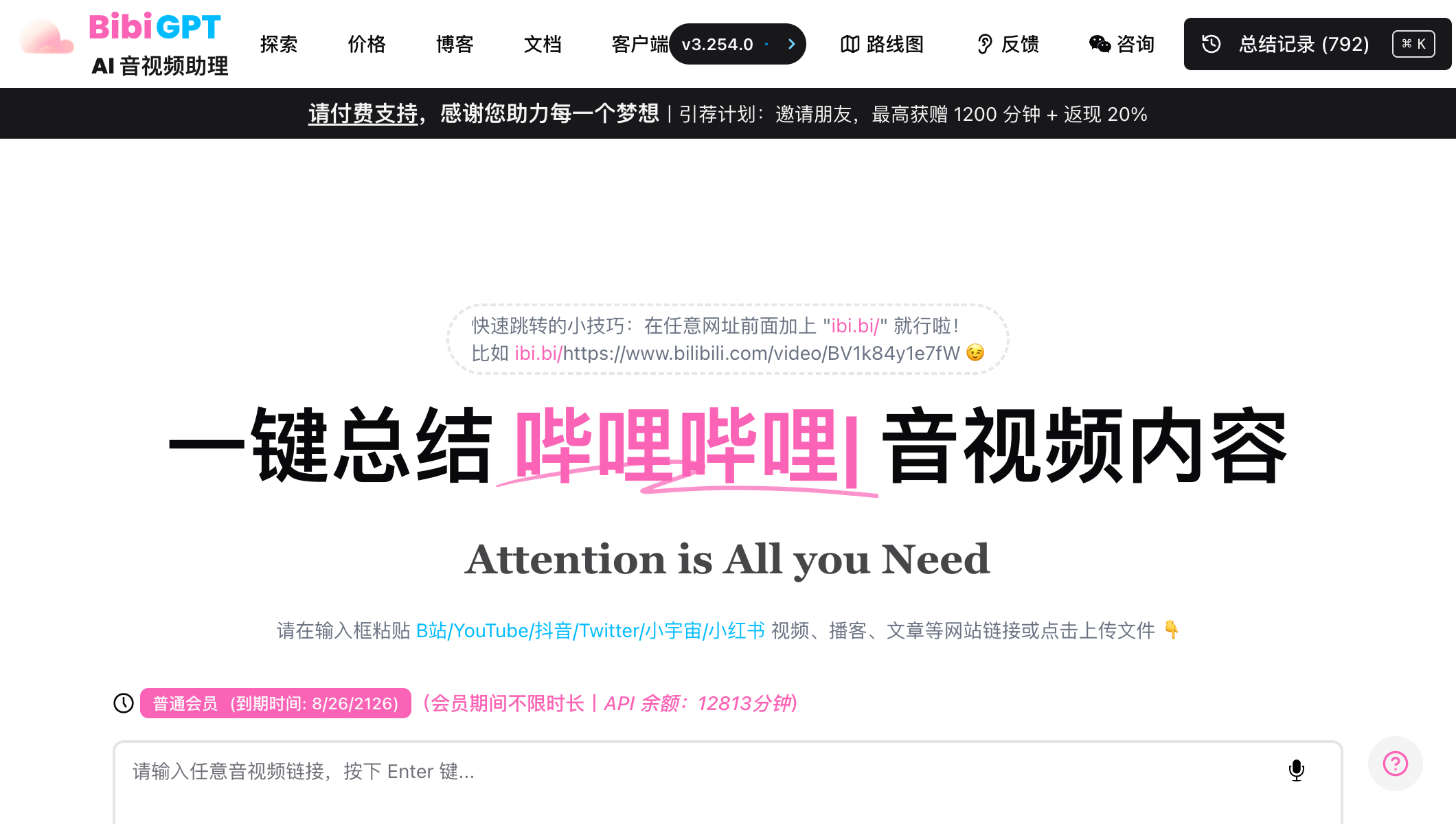 1
1 Bilibili AI Video Summary Tool: BibiGPT Summarizes 30+ Platforms Instantly (2026)
Best Bilibili AI video summary tool 2026? Paste a link for a free AI recap, mind map, and transcript-style takeaways on 30+ platforms — no login needed.
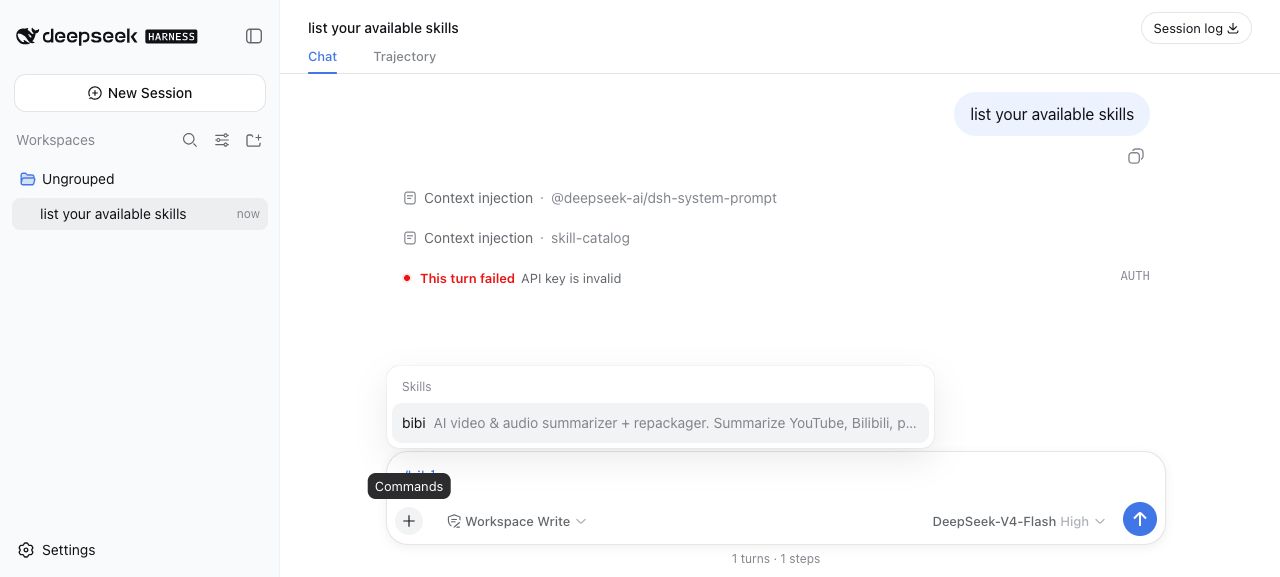 2
2 How to Install Skills in DeepSeek Harness: A Hands-On Guide to Teaching dsh to Watch Videos
Install a video-summary skill into DeepSeek Harness in one copy-paste — SKILL.md matches Claude Code. Or skip dsh: paste a Bilibili or YouTube link in the browser and get a timestamped summary.
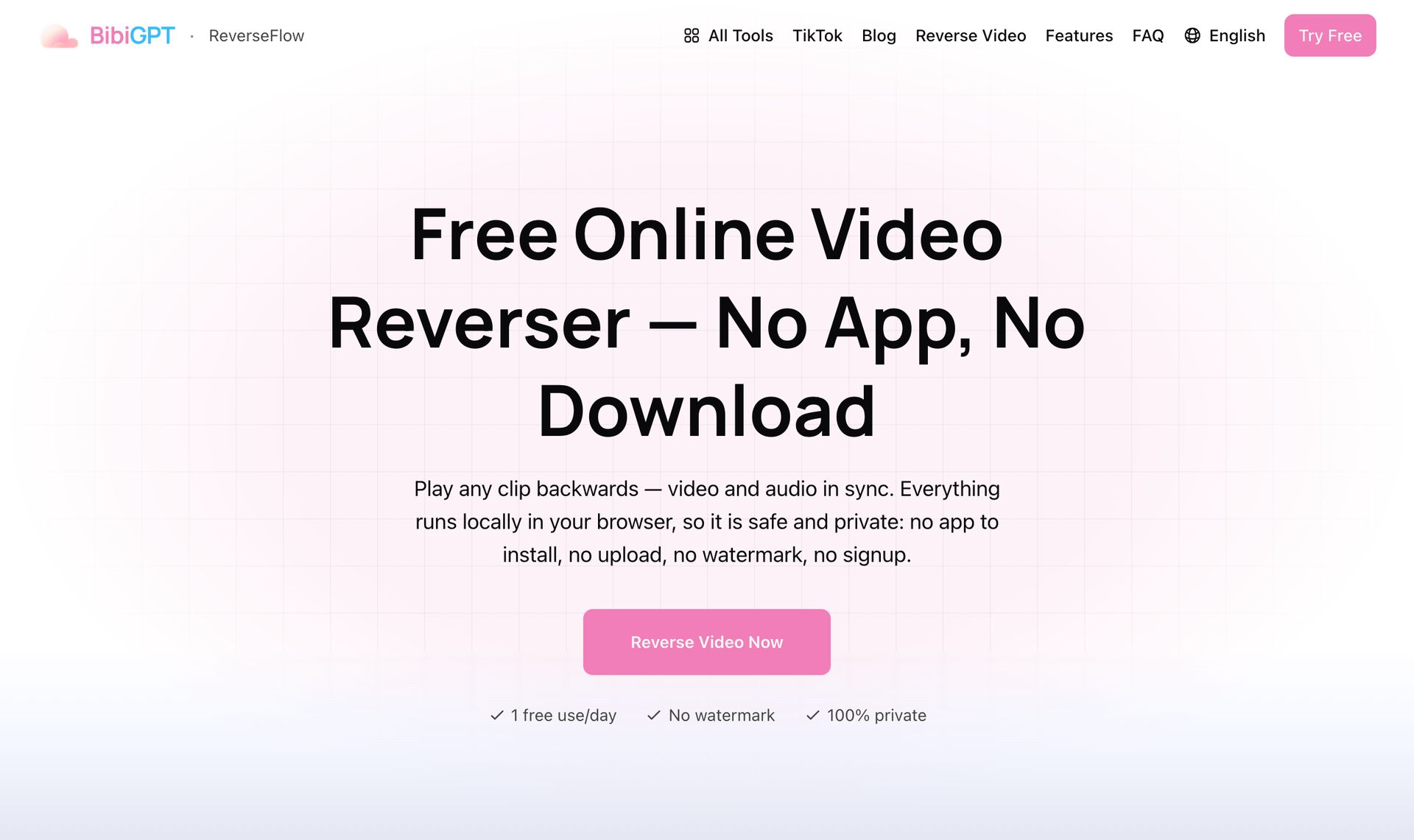 3
3 How to Reverse a Video Without an App — Free, In-Browser, No Download (2026)
Reverse any video free with no app and no download, right in your browser. Step-by-step for iPhone, Android, and PC, plus how to reverse audio (2026).
Not a meeting — just a link you want understood?
Paste a Bilibili, YouTube, podcast, or 抖音 link and get a structured AI summary in under a minute. 3 free summaries a day, no card, no install — and mind maps, article rewrites, and note-app sync when you need more than notes.