GPT-5.6 Explained: Sol, Terra, Luna — and What Changed for Video Work
TL;DR — OpenAI made GPT-5.6 generally available on 2026-07-09 as three durable tiers: Sol (flagship), Terra (everyday), Luna (cheapest/fastest). Launch API prices were Sol $5/$30, Terra $2.50/$15, Luna $1/$6 per million input/output tokens. On 2026-07-30 Terra dropped 20% and Luna 80%. If you just need chapters from a long video, you do not have to pick a SKU.
Get the notes, skip the SKU sheet
Paste a long-form video URL — BibiGPT turns it into chapters, a transcript, and follow-up Q&A.

Key facts (90-second read)
As of 2026-08-19, OpenAI launched GPT-5.6 on 2026-07-09 as three tiers — Sol, Terra, Luna — then cut Terra 20% and Luna 80% on 2026-07-30. Sol stays $5/$30 per 1M tokens. The family is for API and ChatGPT Work seats. If you need a lecture turned into searchable notes, paste the link into BibiGPT instead of wiring three SKUs.
Features
What GPT-5.6 actually is
A family, not a single model. The number is the generation; Sol, Terra, and Luna are capability tiers that can move on their own cadence.
Three named tiers
Sol is the flagship. Terra is the everyday workhorse, competitive with GPT-5.5 on many jobs at a lower bill. Luna is the high-volume, low-cost tier that still tools and multi-steps.
Launch pricing (2026-07-09)
Per 1M tokens: Sol $5 in / $30 out; Terra $2.50 / $15; Luna $1 / $6. Cache writes bill at 1.25× uncached input; cache reads keep a 90% discount, with a 30-minute minimum cache life.
July 30 price cut on Terra and Luna
From 2026-07-30, Terra is $2 / $12 and Luna $0.20 / $1.20 per 1M tokens. Sol's list price stayed put. Subscription prices did not change; those two tiers simply burn fewer credits.
What this means if you work with long video
Three SKUs help API teams. They do not help someone who just wants a lecture turned into notes. BibiGPT is the product for that second person.
You should not have to pick Sol vs Luna
Paste a link, get chapters, a transcript, and follow-up Q&A. The point of a video assistant is the artifact — not a spreadsheet of input/output rates.
Long context is only useful if you keep the notes
A 90-minute lecture still needs timestamps and export. A cheaper Luna call that you do not file is wasted; a chaptered summary is the file.
Org spend caps are an API-team problem
OpenAI added organization and project hard spend limits (over-limit requests return 429). That matters if you run your own pipeline. It does not change how you paste a public video into BibiGPT.
5 key changes (90-second read)
Headline shifts from the GPT-5.6 launch and the 2026-07-30 price update.
- 1
A family with durable names
Sol / Terra / Luna are capability tiers that can ship on their own cadence. The '5.6' number is the generation, not a single checkpoint you pin forever.
- 2
Launch list prices (2026-07-09)
Sol $5/$30, Terra $2.50/$15, Luna $1/$6 per 1M input/output tokens. Cache writes at 1.25× uncached input; cache reads keep 90% off, 30-minute minimum life.
- 3
July 30 Terra and Luna cuts
Terra $2/$12, Luna $0.20/$1.20. Sol unchanged. ChatGPT and Codex subscription prices stayed the same; those two tiers consume fewer credits.
- 4
Alias trap: gpt-5.6 is Sol
The gpt-5.6 API alias routes to Sol, not Luna. Teams that wanted the cheap SKU and typed the short name paid flagship rates. Use gpt-5.6-luna / gpt-5.6-terra explicitly.
- 5
Hard spend caps (2026-07-22)
Org- and project-level caps return HTTP 429 when exceeded. Useful for finance teams running their own pipelines; irrelevant if you only paste public videos into a summarizer.
3 typical scenarios for BibiGPT users
Where the 5.6 family matters — and where a summarizer is the actual product.
You already run OpenAI yourself
Map Sol to hard reasoning, Terra to daily drafts, Luna to bulk tagging. Then still dump the finished video into BibiGPT so humans get chapters instead of a raw token dump.
You just need the lecture notes
A 90-minute course video does not need a SKU decision. Paste the URL, export the transcript, ask follow-up questions. That is the BibiGPT path.
You are comparing 5.5 vs 5.6 for video
5.6 is the new family with named tiers and a price cut. Keep the 5.5 explainer for the previous generation; this page is the 5.6 URL. One intent, one page.
Sources
Launch pricing and the July 30 cut come from OpenAI's own posts.
-
GPT-5.6 general availability on 2026-07-09 as Sol, Terra, and Luna, with launch API list prices of $5/$30, $2.50/$15, and $1/$6 per 1M tokens.
OpenAI — GPT-5.6 ↗ -
On 2026-07-30 OpenAI cut Terra 20% (to $2/$12) and Luna 80% (to $0.20/$1.20). Sol list price unchanged.
OpenAI — price-performance update ↗
Loved by creators, students & researchers
Why people use BibiGPT to turn videos into text every day.
Trusted by 50,000+ users worldwide
“I paste a link and get clean captions in seconds — it saves me hours of retyping every single week.”
Maya R.
Content Creator · Repurposes short videos
“Exporting the transcript lets me review new words at my own pace instead of pausing the video constantly.”
Daniel K.
Language Learner · Studies with real videos
“Accurate, timestamped text I can quote directly. It has quietly become part of my daily workflow.”
Priya S.
Researcher · Cites public talks
FAQ'S
Frequently Asked Questions
Ask us anything!
Popular guides
 1
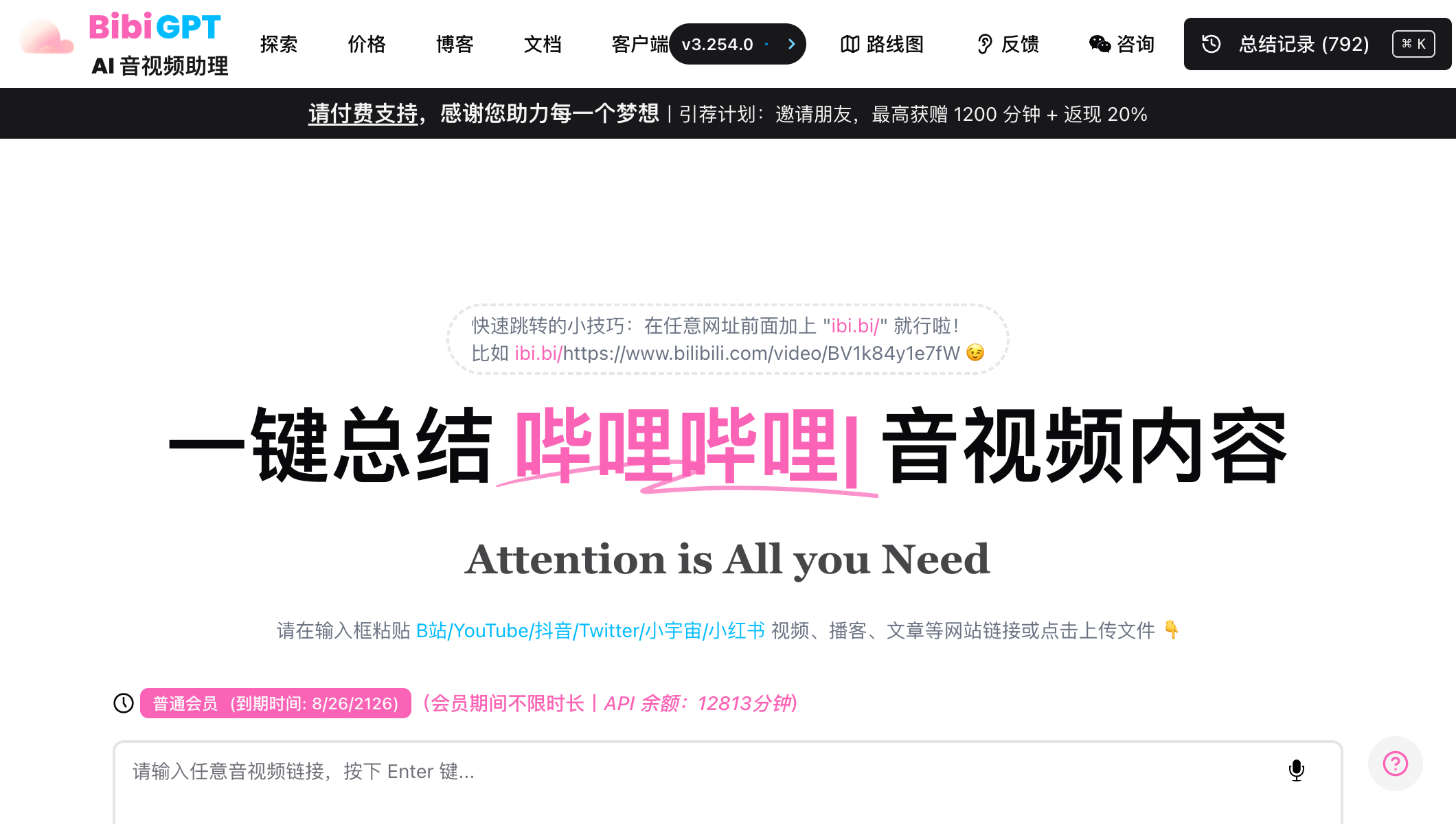
1 Bilibili AI Video Summary Tool: BibiGPT Summarizes 30+ Platforms Instantly (2026)
Best Bilibili AI video summary tool 2026? Paste a link for a free AI recap, mind map, and transcript-style takeaways on 30+ platforms — no login needed.
 2
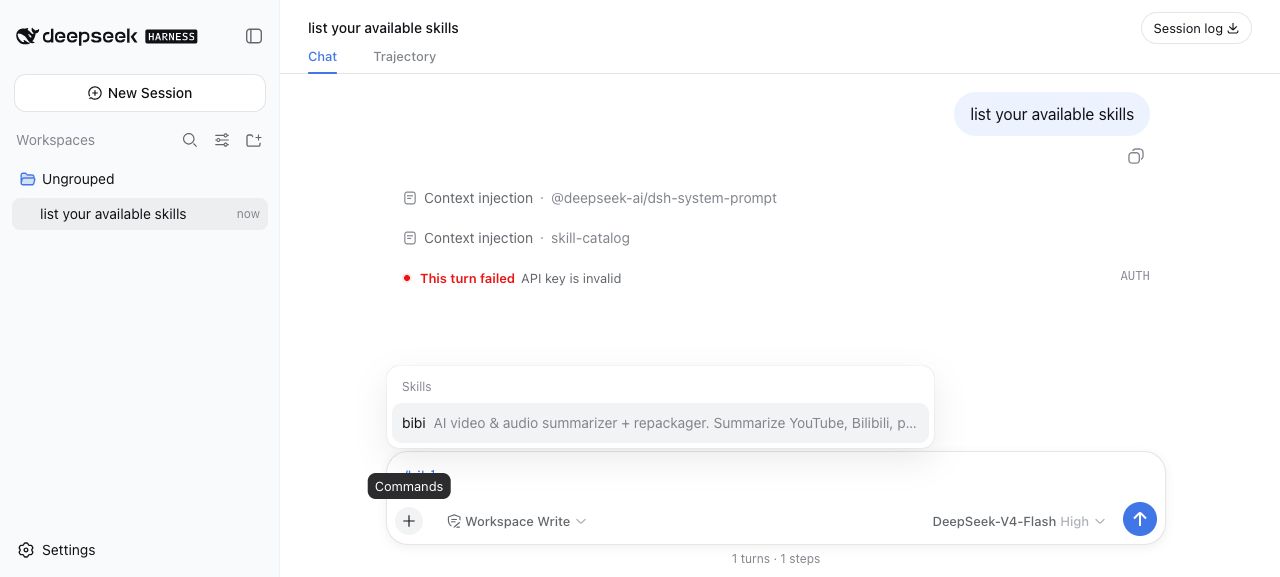
2 How to Install Skills in DeepSeek Harness: A Hands-On Guide to Teaching dsh to Watch Videos
Install a video-summary skill into DeepSeek Harness in one copy-paste — SKILL.md matches Claude Code. Or skip dsh: paste a Bilibili or YouTube link in the browser and get a timestamped summary.
 3
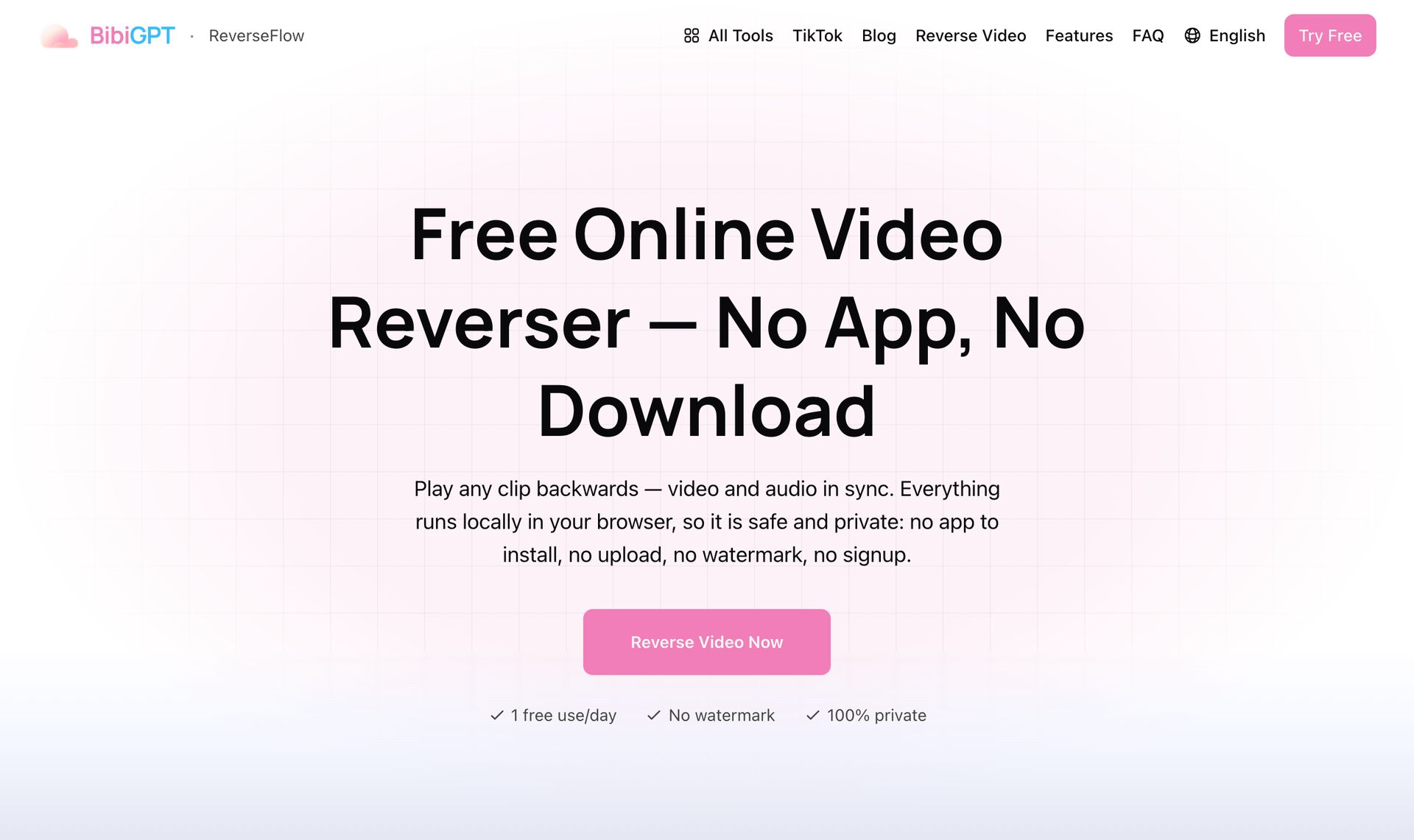
3 How to Reverse a Video Without an App — Free, In-Browser, No Download (2026)
Reverse any video free with no app and no download, right in your browser. Step-by-step for iPhone, Android, and PC, plus how to reverse audio (2026).
Skip the SKU spreadsheet. Get the notes.
Paste a long video into BibiGPT. You get chapters, a transcript, and follow-up Q&A — without picking Sol, Terra, or Luna.