Doubao SeedRealtime Explained: Watch, Listen, and Talk at Once
TL;DR — ByteDance Seed launched SeedRealtime on 2026-08-05. It is a native audio-video full-duplex model, fully rolled out in the Doubao app via the in-chat phone-call button. It jointly reads picture, sound, and timing so you can talk while a video is playing. If you need a searchable recap later, an async summary still wins.
Keep the notes after the call
Paste a long-form video URL — BibiGPT turns it into chapters, a transcript, and follow-up Q&A you can search later.

Key facts (90-second read)
As of 2026-08-19, ByteDance Seed released SeedRealtime on 2026-08-05 — a native audio-video full-duplex model now fully live in the Doubao app. It jointly reads picture, sound, and timing so you can talk while a video plays. A live call does not leave a searchable archive; BibiGPT covers that half of the job.
Features
What SeedRealtime actually shipped
ByteDance Seed's 2026-08-05 release is a native full-duplex model, not a stitched stack of separate speech and vision APIs. It is live in Doubao, not a research preview.
Unified audio + video + text
One architecture fuses the three modalities. The model reads the frame, the soundtrack, and the conversation in the same stream instead of handing off between a captioner and a chat model.
Three headline abilities
Joint audio-visual understanding, proactive turn-taking, and a more natural speaking rhythm. Official copy frames this as 'watch, listen, and talk' in one session.
Live in Doubao's phone-call mode
Update Doubao, tap the phone-call control in a chat, and the session runs on SeedRealtime. ByteDance says this is the first large-scale product landing of native A/V full duplex.
When an async summary is the better tool
A live video call is great for 'what is happening right now'. It is a poor archive. BibiGPT is built for the opposite job: turn a finished video into chapters, a transcript, and follow-up Q&A you can search tomorrow.
You need a record, not a conversation
Lectures, earnings calls, and long podcasts get reused. A live Doubao call evaporates when you hang up. A chaptered summary plus transcript is the artifact you paste into notes.
You are not at the screen
Full-duplex wants you in the call. Async summary works while you commute or after the stream ends — paste the link, come back to key points.
You will ask the same video later
Follow-up Q&A over a saved transcript ('what did they say about pricing at 47:00?') is a different product from talking over a live feed. Keep the video, keep the notes.
5 key changes (90-second read)
Headline shifts from the SeedRealtime launch on 2026-08-05.
- 1
Native full duplex, not a bolted-on stack
SeedRealtime is trained as one audio-video-text model. It is not a captioner piped into a chat model. That is the 'native' claim in the launch note.
- 2
Joint understanding of picture, sound, and time
The model uses the frame, the soundtrack, and turn timing together to guess intent — including when to speak up without waiting for a tap.
- 3
Proactive turn-taking
ByteDance lists 'active intervention' as a core ability: the model can jump in, not only answer after you finish a sentence.
- 4
Shipped in Doubao, not a waitlist demo
The launch post says the model is fully rolled out. The consumer path is Doubao's in-chat phone-call button after an app update.
- 5
Live talk vs later notes
A duplex call is for the moment. If you need chapters, a transcript, or a question you will ask again tomorrow, keep an async summary next to it.
3 typical scenarios for BibiGPT users
Where a live Doubao call and an async summary should sit side by side.
Clarify a lecture while it plays, then keep the notes
Use Doubao's call to interrupt a confusing demo. When the class ends, paste the same recording into BibiGPT for chapters and a transcript you can review before the exam.
Watch a product livestream, then write the recap
Full duplex helps you ask 'what just appeared on screen?'. The recap you send to a team still needs timestamps and exportable text — that is the async summary.
Skip the call and just file the video
Not every recording needs a conversation. A 90-minute podcast or earnings replay is often faster as a chaptered summary plus follow-up Q&A than as another live session.
Sources
Primary launch notes. Dates and product claims come from these pages.
-
ByteDance Seed announced SeedRealtime on 2026-08-05 as a native audio-video full-duplex model rolled out in the Doubao app.
ByteDance Seed blog ↗ -
SeedRealtime is listed on the Seed homepage with the line 'watch, listen, and talk' and a 2026-08-05 model-release stamp.
ByteDance Seed ↗
Loved by creators, students & researchers
Why people use BibiGPT to turn videos into text every day.
Trusted by 50,000+ users worldwide
“I paste a link and get clean captions in seconds — it saves me hours of retyping every single week.”
Maya R.
Content Creator · Repurposes short videos
“Exporting the transcript lets me review new words at my own pace instead of pausing the video constantly.”
Daniel K.
Language Learner · Studies with real videos
“Accurate, timestamped text I can quote directly. It has quietly become part of my daily workflow.”
Priya S.
Researcher · Cites public talks
FAQ'S
Frequently Asked Questions
Ask us anything!
Popular guides
 1
1 Bilibili AI Video Summary Tool: BibiGPT Summarizes 30+ Platforms Instantly (2026)
Best Bilibili AI video summary tool 2026? Paste a link for a free AI recap, mind map, and transcript-style takeaways on 30+ platforms — no login needed.
 2
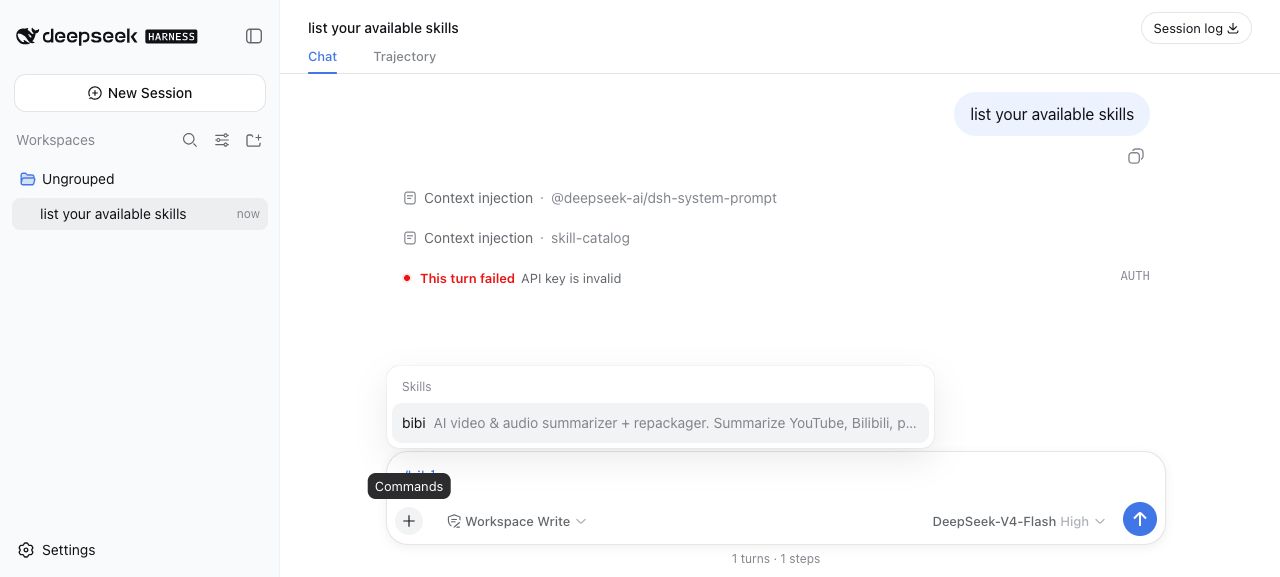
2 How to Install Skills in DeepSeek Harness: A Hands-On Guide to Teaching dsh to Watch Videos
Install a video-summary skill into DeepSeek Harness in one copy-paste — SKILL.md matches Claude Code. Or skip dsh: paste a Bilibili or YouTube link in the browser and get a timestamped summary.
 3
3 How to Reverse a Video Without an App — Free, In-Browser, No Download (2026)
Reverse any video free with no app and no download, right in your browser. Step-by-step for iPhone, Android, and PC, plus how to reverse audio (2026).
Need notes after the call ends?
Paste a video link into BibiGPT. You get chapters, a transcript, and follow-up Q&A you can search later — the async half of 'watch, listen, and talk'.